
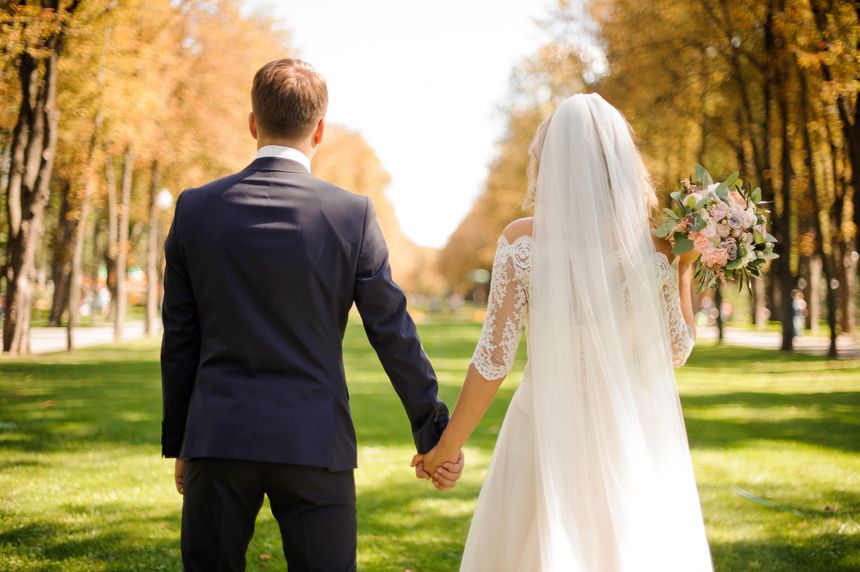
Wedding season is upon us again. It is important for those planning to marry to be clear on the formalities of marriage ceremonies and the legal implications of getting married.
What are the current rules?
Both parties must be old enough to marry. In 2023 the law changed, meaning that parties marrying in England and Wales must be at least 18 years old.
Both parties must also be free to marry. This means that both parties must be single, not in a civil partnership or already married, unless the marriage has ended by death or divorce.
As the law stands, marriage must take place at an approved venue and be conducted by an authorised officiant. Authorised venues include religious buildings, registry offices and licensed venues.
The venue and officiant will depend on the type of ceremony you intend to have, whether that be a religious ceremony or a civil ceremony.
Religious ceremonies
Religious ceremonies must take place in an authorised religious building.
Same-sex couples are able to have a religious ceremony in a religious building, so long as the building has been registered for the marriage of same-sex couples.
It is important to check in accordance with your specific requirements as rules vary depending upon the religion.
Civil ceremonies
Civil ceremonies are non-religious legal marriages. They allow couples to marry without religious formalities.
Civil ceremonies take place at a registry office or an approved venue and are performed by a registrar. It is important to note that notice must be given of intention to marry at your local register office at least 28 days before the ceremony.
Same sex couples are able to have a civil ceremony at an approved premises, so long as it is registered for the marriage of same-sex couples
Civil ceremonies are also used to legalise Humanist ceremonies. As it stands, Humanist ceremonies are not currently legally binding and, therefore, a separate civil ceremony is required.
Can I get married outdoors?
Since April 2022, as a result of the pandemic, rules around ceremonies taking place outdoors have relaxed.
Religious ceremonies can now take place outdoors on the grounds of religious premises, so long as the venue is registered and authorised to do so.
Civil ceremonies can also take place outdoors but only within the grounds of an existing approved premises.
If the venue is not an approved premises, for example, a beach, a private garden or non-licensed space, then an informal ceremony or blessing can take place outdoors, but it should be noted that it is not legally binding and a legal ceremony at a register office will be required.
What are the rules for getting married abroad?
Marriages that take place abroad are legally valid in England and Wales so long as both parties are free to marry and the marriage meets the legal requirements of the country where the marriage is taking place.
Documentary requirements for marriage vary from country to country and should be reviewed carefully prior to choosing the destination.
Parties may choose to have their legal wedding in England and Wales prior to or following a ceremony abroad. It is important to check the requirements of your chosen location.
Future Reform
For those recently engaged, planning to marry in 2027 and beyond, it is important to note that further reform is on the way.
The current law governing marriage (The Marriage Act 1836) dates back some 200 years. The reform is intended to be more inclusive and provide couples with the freedom to marry how they wish.
Reform to the current laws might include:
- Being able to marry at a variety of locations with a focus on the officiant being authorised rather than the location itself.
- Humanist weddings, conducted by Humanist celebrants may become legally binding; and
- Standardising rules across faith groups.
The push for reform continues and is expected to be implemented in 2027.
What are the legal implications of getting married?
Celebrations aside, it is important to consider the legal implications of marriage prior to tying the knot.
Parties should consider how property is to be shared, future estate planning, pre-nuptial and post-nuptial agreements, and the potential consequences of divorce. For more information read this legal checklist or contact our family team for further assistance.

Recent posts by Lesleyanne Peat
Share this



/Passle/60d59e96e5416a116451a194/SearchServiceImages/2026-08-24-16-02-22-117-6a8c6b0eb4553f6e28c11474.jpg)
/Passle/60d59e96e5416a116451a194/SearchServiceImages/2026-08-14-12-27-16-772-6a7f09a4267778e963da76e7.jpg)
/Passle/60d59e96e5416a116451a194/SearchServiceImages/2026-08-06-16-00-41-460-6a74afa9c452b1142849c71a.jpg)